Memorial Stones
What to Do With All the Ashes: Best Options for a Complete Memorial (2025 UK Guide)
If using every last bit of your loved one's ashes feels important, this guide covers the best 2025 UK options — from Remembrance Stones to biodegradable tree urns — for a complete and meaningful memorial.
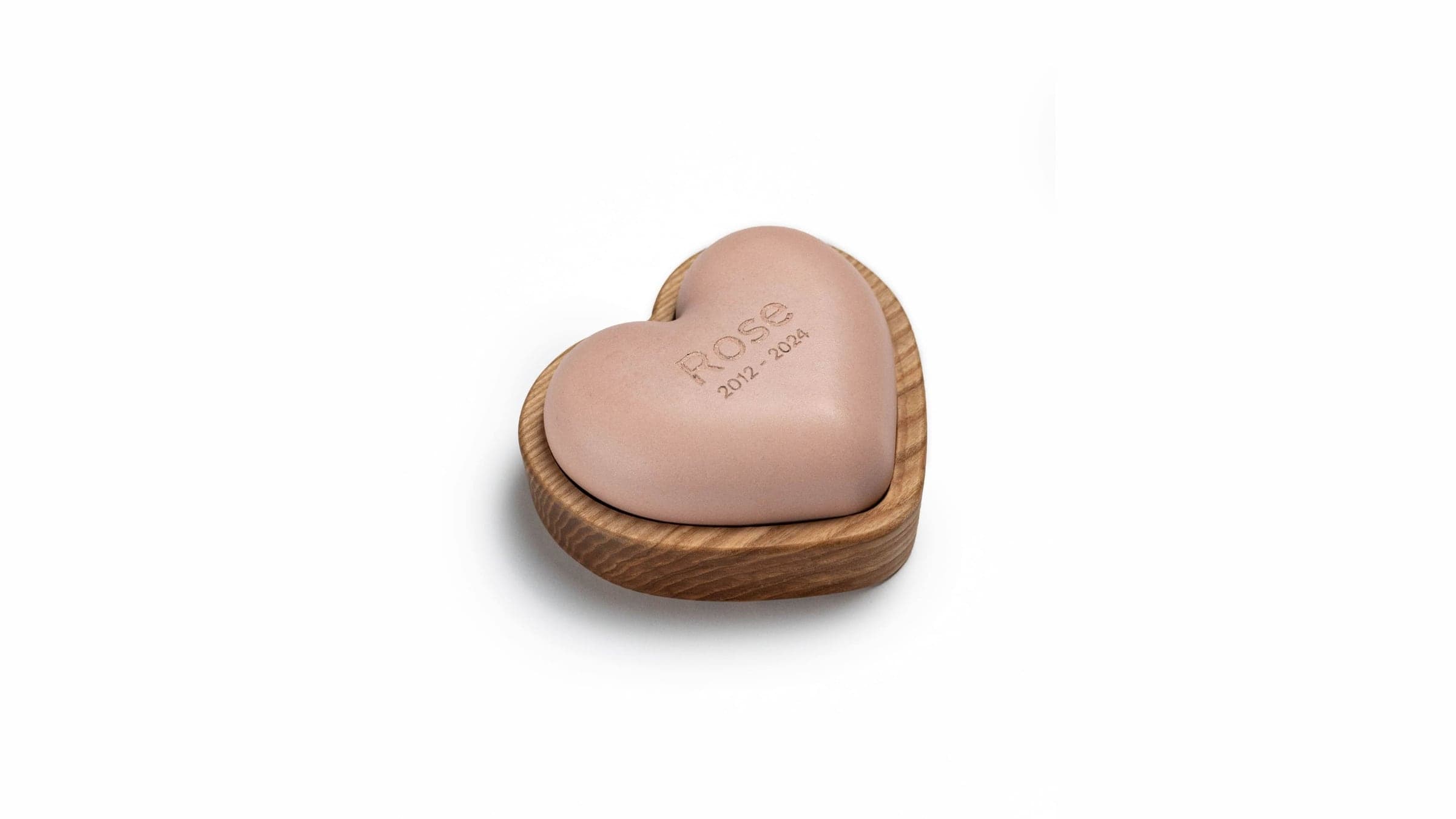
Photo: Spogad / spogads.com · Provided by Spogad
One of the most common questions families face after a cremation is this: what do we do with all of it? Most memorial products — jewellery, glass art, tattoo ink — only use a small amount of ash. But for many families, using every last bit of their loved one in a meaningful way feels important. It feels more complete.
If that resonates with you, this guide is for you. Here we look at the best options available in 2025 for memorials that incorporate the full set of cremation ashes — not just a pinch.
Why Using All the Ashes Matters
There's no right or wrong approach to handling cremated remains. Some families are entirely comfortable keeping ashes in an urn indefinitely, or scattering a portion while keeping the rest. Others find a sense of peace in knowing that all of their loved one's remains have been given a purposeful, permanent home.
A full set of human ashes typically weighs between 1.5 kg and 3.5 kg — far more than a pinch of powder. Options that can genuinely work with this volume are fewer than you might expect, which is why it's worth knowing exactly what's available.
Option 1: A Remembrance Stone Made with the Ashes
For families who want to keep much of their loved one's ashes in one object they can hold, a remembrance stone is the most direct option.
Unlike most memorial keepsakes, which set a tiny amount of ash inside glass or resin, a remembrance stone uses the ashes as a main ingredient. The result is a solid, smooth, weighty stone. How much of the remains it takes depends on the provider and the design — some services are built around using all of them.
Spogad
Spogad makes remembrance stones by hand, for people and for pets. The ashes are purified and prepared, mixed into the stone, and shaped — in a mould, or as a figure modelled from your photographs — before the piece is dried and finished.
- Designs: the Remembrance Stone Heart (13 × 11 × 3 cm, on a wooden base) and the Silhouette, a stone shaped as your pet.
- Personalisation: engraving, custom colour and two-tone finishes.
- Guarantee: a free five-year guarantee covering defects in materials and workmanship.
- Turnaround: Spogad states each piece is made within three to four weeks of receiving the ashes.
Published prices, checked 21 September 2026: Heart £350 for a pet, £400 for a person; Silhouette £310 from an existing mould, or from £460 personalised.
If keeping all of the ashes together matters to you, ask how much of the remains a given design uses before you order. You can ask us and we will find out. Our full guide to remembrance stones compares Spogad with Forever in Stones and Parting Stone side by side.
Parting Stone (United States)
For families open to an international option, Parting Stone (partingstone.com) offers a distinctive service: they solidify 100% of the cremation ash into a collection of 40–80 smooth, natural-looking stones. The appearance of each collection is entirely natural, shaped by the individual's ashes. This is one of the few services in the world that transforms the complete set of remains rather than using a portion.
Option 2: Scatter with Purpose — Natural Burial Grounds and Woodland Sites
For those who want all the ashes to go somewhere meaningful, dedicated natural burial and scattering sites across the UK offer beautiful alternatives to a traditional grave.
What this looks like in practice:
- Scattering in a dedicated woodland or meadow
- Interring in a biodegradable urn in a natural burial ground
- Placing in a columbarium niche at a cemetery or crematorium
This option gives all the ashes a physical resting place without any permanent container. It tends to appeal to families who want a place to return to and find comfort — a bench, a tree, a favourite corner of the countryside — but don't want the formality of a traditional grave.
The Royal Parks in London also offer dedicated scattering areas and Gardens of Remembrance, which can be a meaningful choice for families in the capital.
Option 3: Biodegradable Urns — Become a Tree
A growing number of families are choosing to give all their loved one's ashes back to the earth through a biodegradable memorial urn planted with a tree or bush.
The Bios Urn (available through bloomagain.co.uk and legendurn.co.uk) is the most well-known product of this kind. It holds a full set of cremation ashes alongside a seed or sapling of your choice. As the urn biodegrades, the ashes gradually nourish the plant above.
The Spirit Tree Urn (available at urnsforashes.co.uk) is designed to hold the full remains of an adult and is award-winning for its design.
Price range: £40–£100 for the urn itself. The tree or sapling is sourced separately.
This is a particularly meaningful choice for someone who loved nature, or for families who want a living memorial they can watch grow year after year.
Option 4: Full Interment at a Cemetery or Columbarium
The most traditional route remains widely used for good reason. Interring the full set of ashes in a cemetery plot or columbarium niche provides a permanent, accessible resting place that the whole family can visit.
In the UK, cremated remains can be buried in a dedicated ashes plot, interred within an existing family grave, or placed in a niche in a columbarium wall — often at the same crematorium where the cremation took place.
This option pairs well with a bespoke urn selected specifically to honour the person. Many families choose a meaningful, personalised urn as a way of dignifying the remains before placing them in a permanent location.
Option 5: Scattering at Sea
For those whose loved one had a connection to the ocean — or simply wanted to be free — scattering at sea is a legal and growing option in the UK.
You can do this yourself from a boat or from the shore, or use a professional scattering service. No government licence is required, though you should avoid scattering too close to beaches or populated areas.
Biodegradable water urns are also available, allowing the ashes to be placed in a specially made urn that floats briefly before gently sinking.
How to Choose
| What Matters Most | Recommended Option |
|---|---|
| Much of the ashes kept in one object | Remembrance stone — Spogad, Forever in Stones or Parting Stone |
| Living memorial that grows | Biodegradable tree urn |
| A place to visit | Cemetery interment or natural burial ground |
| Ocean connection | Sea scattering |
| Total transformation of all remains | Parting Stone (international) |
FAQ
Can all the ashes be used in a Remembrance Stone? It depends on the provider and the design. Parting Stone is built around solidifying all of the remains. With other makers, including Spogad and Forever in Stones, ask how much a given design uses before ordering.
Is it legal to scatter ashes anywhere in the UK? You can scatter ashes on most land and water in the UK provided you have the permission of the landowner. There are no specific laws prohibiting it, but conservation areas and privately owned beaches may have their own rules. There are no restrictions on scattering at sea.
Can I split the ashes between a Remembrance Stone and another memorial? Absolutely. Many families choose to use the majority of the ashes for a Remembrance Stone and retain a small amount for a piece of jewellery or another keepsake.
How long does a Remembrance Stone last? A well-made remembrance stone is designed to last for generations with ordinary care. Check the guarantee: Spogad offers five years against defects in materials and workmanship.
Does a biodegradable urn need to be buried in a cemetery? No. Biodegradable urns can be buried on private land (with the landowner's consent), in a dedicated natural burial ground, or in your own garden — though you should consider whether the garden will remain in the family long-term.
Every Option, Guide by Guide
The five options above are the ones that work with the full set of remains. Most other memorials use a portion, which is why families so often combine them — something for the bulk, something small for each person who wants one. Our guides, ordered by how much of the ashes each option takes:
Built for the bulk of the remains
- Remembrance stones — the UK and US providers compared, and how much each design uses
- Pet memorial stones — including stones shaped like the animal you lost
- Cremation urns — sizes, the one-cubic-inch rule, and UK prices from about £4
- Memorial trees — biodegradable urns, species, and where you may plant
Uses a substantial portion
- Memorial diamonds — 200–500g, and the longest wait of any option
- Memorial fireworks — 200–300g in a single set, with nothing recovered afterwards
- Memorial reefs — set into a structure on the seabed; the quantity is not published, so ask
Uses a teaspoon or a tablespoon
- Cremation jewellery — what the ashes are sealed in, and what UK makers charge
- Glass art — handblown pieces, and why resin is not the same thing
- Ashes into vinyl — a playable record with their crackle in the groove
- Ashes in tattoo ink — why studios refuse raw ashes, and how prepared ink works
- Ashes into space — a stratospheric release, or a rocket launch
Conclusion
There is no single right answer when it comes to deciding what to do with a loved one's ashes. But for families who feel strongly about using all of the remains — not leaving anything behind in a box — there are more beautiful, thoughtful options today than ever before.
A remembrance stone is the most direct way to keep much of the remains in one object you can hold — whether from Spogad, Forever in Stones or Parting Stone. For families who want something living, a biodegradable tree urn offers a different but equally meaningful path.
Whatever you choose, take the time you need. There is no rush.
Disclosure: From Ashes has a commercial relationship with Spogad and may earn from orders placed through us. It does not affect which providers we cover or what we say about them.
Continue reading
Remembrance Stones from Ashes: The UK Guide
Stones made with cremated remains are the one keepsake that can hold most of what the crematorium returns. Here is how they are made, what the three providers serving the UK charge, and how to choose between them.
Turning Ashes into a Living Tree: The Complete UK Guide to Memorial Tree Burials (2025)
A living, growing memorial — biodegradable urns and memorial trees offer one of the most poetic and eco-friendly tributes. A complete UK guide for 2025.
Cremation Urns: Sizes, Prices and How to Choose One
An urn is the only memorial designed to hold everything the crematorium returns. Getting the size right takes one simple calculation — and most families pay far less than the funeral director's price list suggests.