Memorial Jewelry
Cremation Jewellery from Ashes: The UK Guide
Ashes jewellery is the keepsake most families choose first — it takes a teaspoon, costs less than anything else, and you can wear it every day. Here is how the two kinds differ, what UK makers charge, and what to check before you post anything.
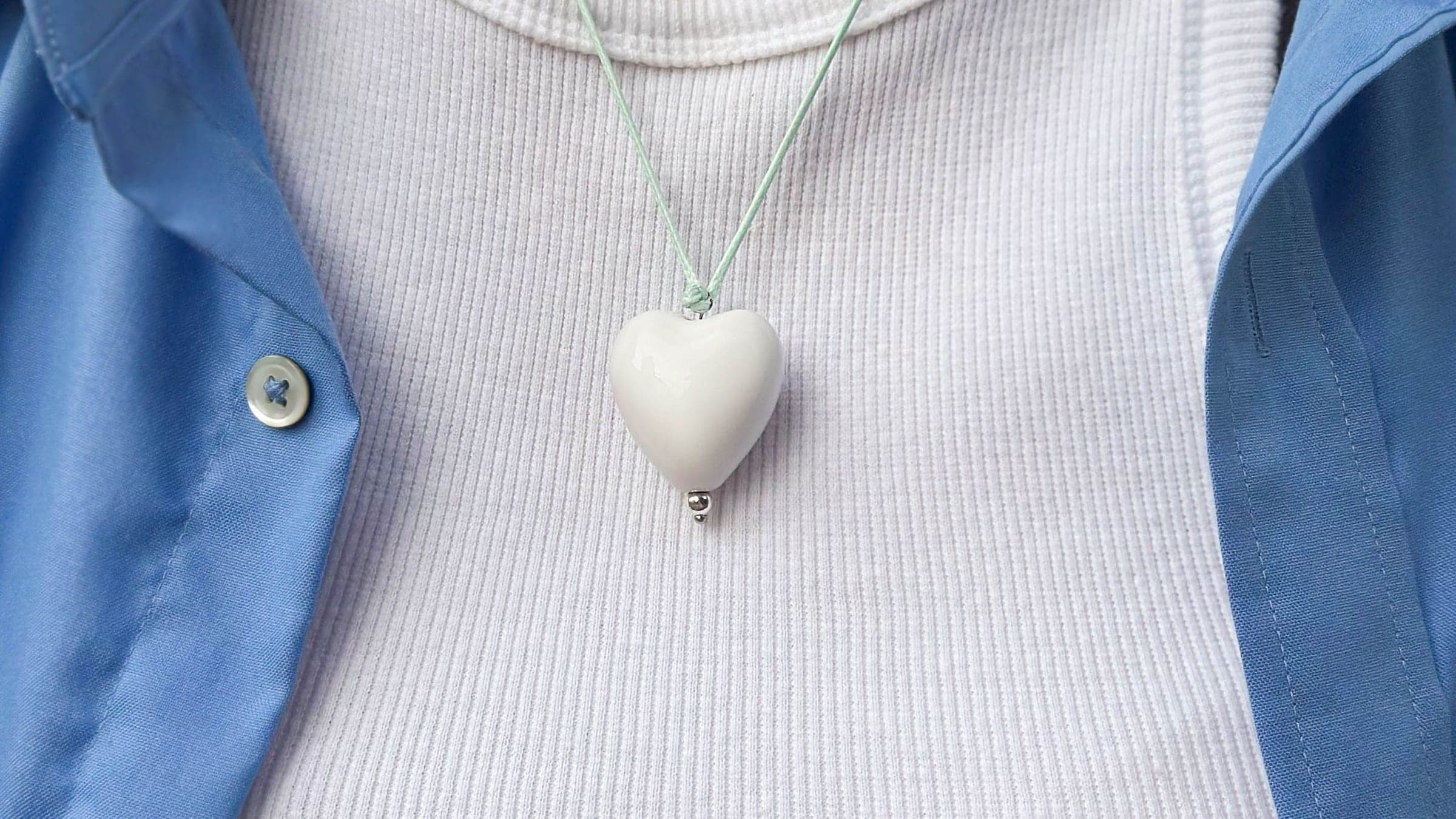
Photo: Spogad / spogads.com · Provided by Spogad
Of everything that can be made from ashes, jewellery is the one most families reach for first. It needs the least — a teaspoon, often less — so it does not force a decision about the rest. It is the cheapest option by a wide margin. And it is the only one you can have with you at work, on a train, in a hospital waiting room.
It is also the most crowded market, which makes it the easiest place to buy something disappointing.
The two kinds, and why the difference matters
Self-fill. The piece has a small hollow chamber closed with a tiny screw. It arrives empty; you fill it at home with a pinch of ashes, using the funnel supplied. Nothing is posted anywhere, nothing leaves your house, and prices start at around £25.
Set by a maker. You send a small portion of the ashes to a jeweller, who works them into the piece — sealed under glass or crystal, fused into a glass bead, or set into the metal itself. It costs more and takes longer, but the ashes become a permanent, visible part of the design rather than a loose pinch inside a cavity.
There is a third thing sold alongside these, and it is worth naming: resin. Ashes suspended in resin are cheap to make and look convincing at first. Resin is softer than glass, can yellow with age and daylight, and scratches. At least one established UK maker — Ashes with Art — markets itself specifically as "never resin", using sealed chambers or kiln-fired glass instead. If a listing does not say which it is, ask before buying.
How much ash it takes
Very little. Ashes with Art states it needs "just a small amount — typically a teaspoon" whatever the size of the piece, and returns what it does not use. That is the norm across the trade, and it is why jewellery pairs easily with something larger — an urn, a tree, a remembrance stone — rather than competing with it.
What UK makers charge
Prices as published on each maker's own site, checked 23 September 2026:
| Maker | Where | From | Notes |
|---|---|---|---|
| Ashes with Art | Worthing, plus a workshop in Birmingham's Jewellery Quarter; trading since 1996 | Rings from £155, pendants from £180, bracelets from £165 | Resin-free; sterling silver, 9ct and 18ct gold, platinum; around 2 weeks, bespoke 2–6; lifetime manufacturing guarantee; free UK delivery |
| Hand on Heart | Cumbria; trading since 2009 | Necklaces £180–£200, rings £210–£239, bracelets £217–£224, earrings £181 | 925 silver and 9ct gold; also pet ashes, hair, fingerprints |
| Spogad | UK | Ash pendant and charm bead; prices not published | Also makes remembrance stones |
| Self-fill pieces from general retailers | — | from about £25 | You fill it yourself; quality varies enormously |
At the top end, Ashes with Art says bespoke commissions pass £15,000. Most people spend between £150 and £250 for something solid in silver.
For glass beads and pendants — ashes fused into hand-worked glass rather than set into metal — expect roughly £60–£150, and see our glass art guide. For diamonds grown from the carbon in ashes, a different proposition entirely, see the diamonds guide.
What to check before you buy
- What the ashes are actually sealed in. Glass, crystal and sealed metal chambers last. Resin is the cheap answer and behaves like one over decades.
- The metal. Solid sterling silver (925) or gold. "Silver-plated" and "silver-tone" wear through, and once the plating goes there is no fixing it.
- Whether unused ashes come back. Get it in writing before posting anything, and ask what they are returned in.
- How the ashes travel. Ask what happens if a parcel is lost. A maker who has thought about this will have an answer ready.
- Everyday wear. Self-fill chambers can loosen; a drop of jewellery glue on the screw solves it. Take any piece off before swimming or showering.
- The guarantee. Ashes with Art includes a lifetime manufacturing guarantee. Others say nothing — which is itself an answer.
Common questions
Is it safe to wear ashes?
Yes. Cremated remains are sterile, inert mineral fragments, and in jewellery they are fully enclosed.
Can I fill the piece myself?
With a self-fill design, yes. Work over a sheet of paper so anything spilled can be returned to the container, and use the funnel supplied.
Can several family members each have one?
Easily — this is one of the main reasons people choose jewellery. A teaspoon covers several pieces, so a set can be made for siblings or children from one small portion.
Does it work with a pet's ashes?
Yes, and most UK makers treat it as standard; some will also work with fur or whiskers. See our guide to pet memorials.
What if I have no ashes — only hair?
Several makers, including both named above, work with hair as well as ashes. It is a common choice when the ashes were scattered years ago.
Sources
- Ashes jewellery — Ashes with Art; prices, materials, resin-free construction, turnaround, guarantee (checked 23 September 2026)
- Cremation ashes jewellery — Hand on Heart; prices and materials (checked 23 September 2026)
- Ash pendant — Spogad (checked 23 September 2026)
- Ashes keepsake jewellery — Urns UK; entry-level self-fill prices (checked 21 September 2026)
Disclosure: From Ashes has a commercial relationship with Spogad and may earn from orders placed through us. It does not affect which providers we cover or what we say about them — Ashes with Art, Hand on Heart and the other makers named here are alternatives we have no relationship with.