Memorial Diamonds
Diamonds from Ashes: The Complete UK Guide (2025)
How memorial diamonds are made from ashes, what they cost in the UK, the providers worth knowing and the honest pros and cons before you decide.
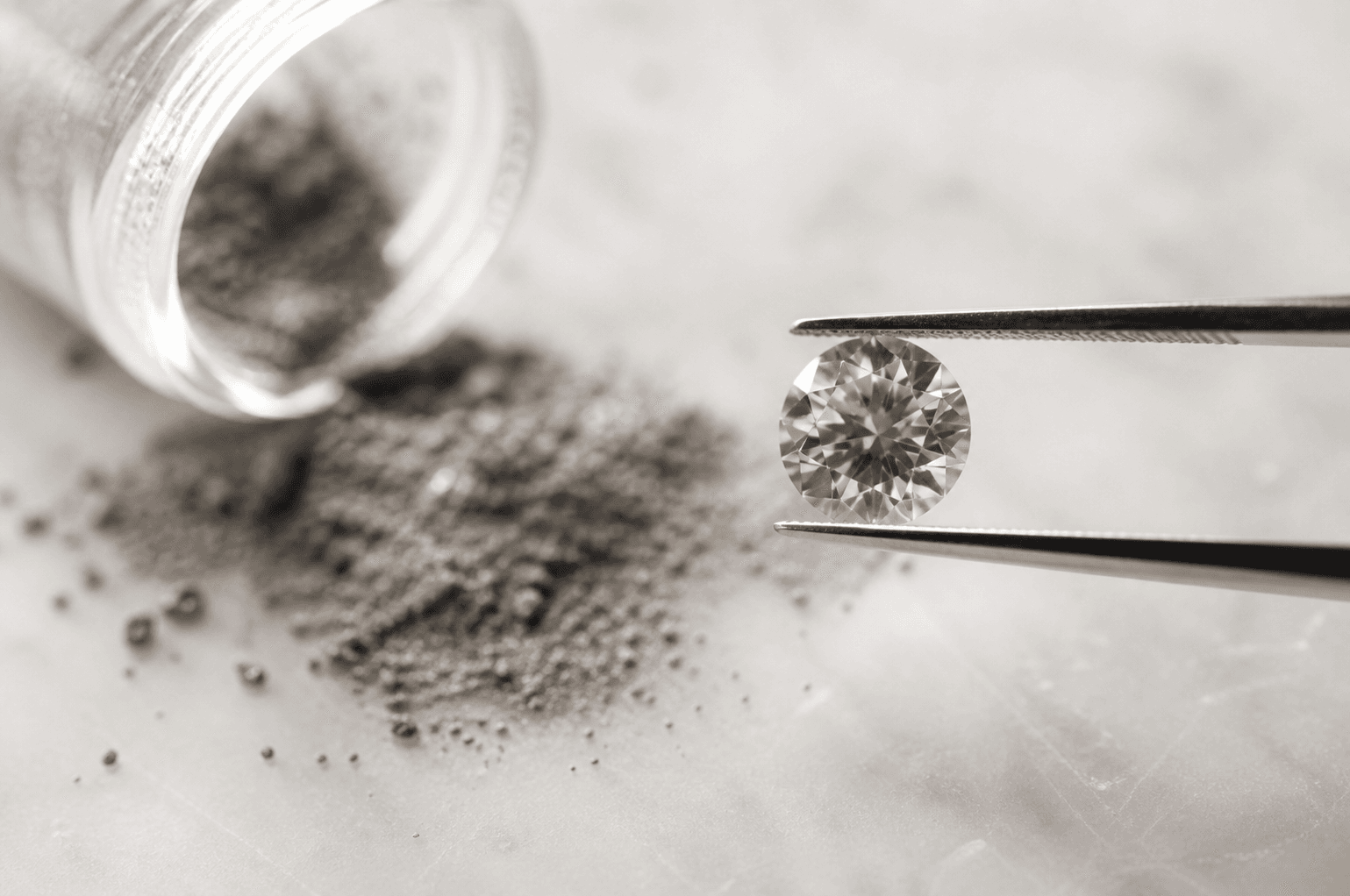
There is something quietly extraordinary about the idea of turning the physical remains of someone you love into a diamond — one of the hardest, most enduring substances on earth. It sounds almost mythological. But it is real, it is science, and thousands of families across the UK choose this memorial every year.
This guide covers everything you need to know about memorial diamonds made from ashes: how they are made, what they cost in the UK, which providers to consider, and the honest pros and cons to weigh before deciding.
What Is a Memorial Diamond from Ashes?
A memorial diamond (also called an ash diamond or cremation diamond) is a genuine, certified diamond grown in a laboratory using carbon extracted from the cremated remains — or hair — of a person or pet.
The result is a real diamond, physically and chemically identical to one mined from the earth. It can be set in a ring, pendant, or earrings. It can be kept in a box at home. It can be passed down through generations.
The practice began in the early 2000s, pioneered by Swiss and American companies who recognised that the HPHT (High Pressure, High Temperature) technology used to grow lab diamonds could be adapted for a profoundly personal use. Today, it is one of the most sought-after alternatives to traditional burial and interment.
How Are Diamonds Made from Ashes?
The process is a careful fusion of industrial chemistry and deeply human care. Here is what happens, step by step:
- Carbon extraction. Cremated remains contain a small percentage of carbon — typically 1–4%. The company heats the ashes in a specialised, oxygen-free environment at temperatures exceeding 5,000°F, driving off other elements and converting the remaining carbon into graphite. This purification process can take several weeks and results in carbon that is 99.99% pure.
- Diamond growth. The purified carbon is placed inside an HPHT press alongside a tiny natural diamond "seed". The machine then replicates the conditions deep inside the earth — immense pressure (around 850,000 psi) and extreme heat — causing the carbon to crystallise around the seed and grow into a raw diamond. Depending on the size desired, this stage takes between two months and a year.
- Cutting and polishing. The raw diamond is then cut and polished by skilled gem cutters. You can choose from several cuts: brilliant, princess, heart, emerald, and others depending on the provider.
- Certification. Most reputable providers send the finished diamond to be independently certified — usually by the IGI (International Gemological Institute) or GIA (Gemological Institute of America) — confirming it is a genuine diamond.
How much ash is needed? Most companies require around 200–500g of cremated remains, or as little as 5–10g of hair. If you have less, many providers will work with you to find a solution. Importantly, a significant portion of ash is typically returned to the family along with the diamond.
What Options Are Available?
Memorial diamonds are far from one-size-fits-all. You can customise:
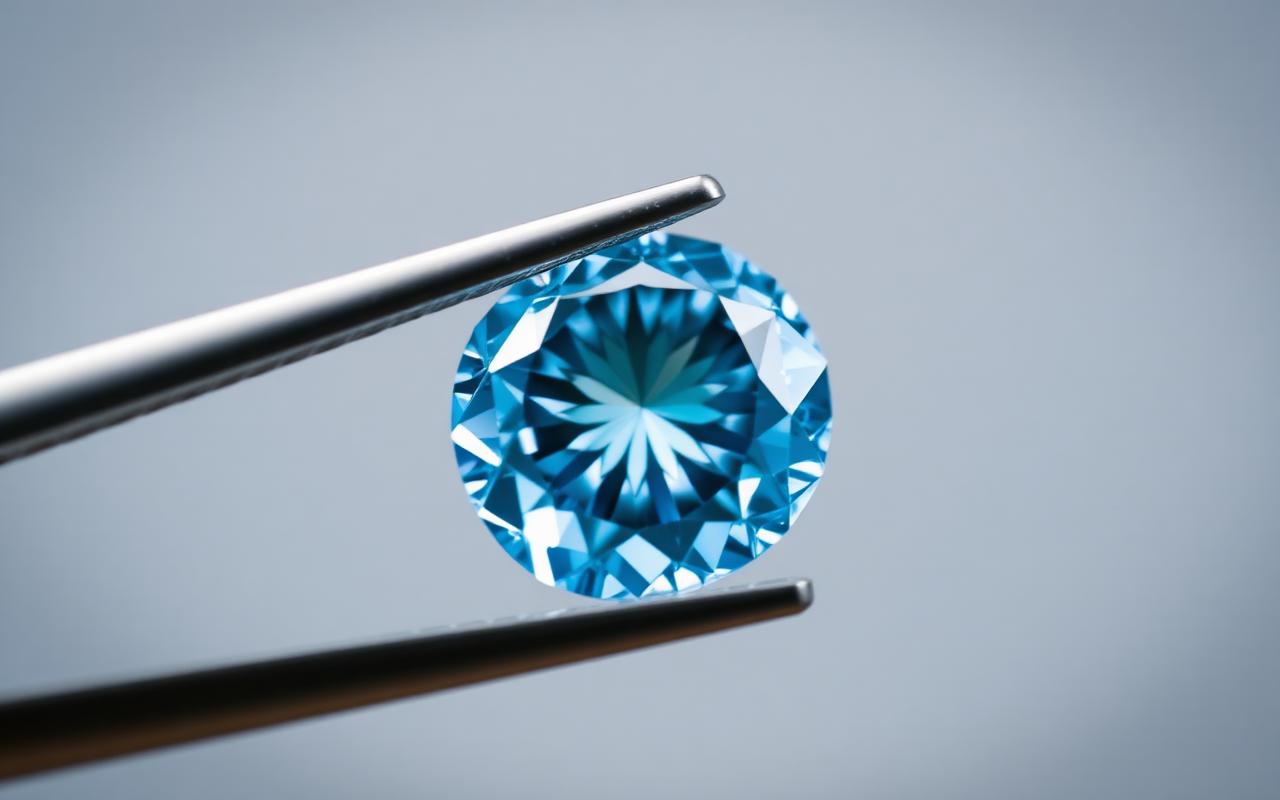
- Colour: Most providers offer blue (the most natural result of ash carbon), yellow, colourless, green, red, and black. Colour is influenced by trace elements in the ashes and by controlled refinement processes.
- Carat size: Typically ranges from 0.25 to 2.0 carats. Larger diamonds take longer and cost significantly more.
- Cut: Brilliant, princess, heart, emerald, asscher, radiant are common options.
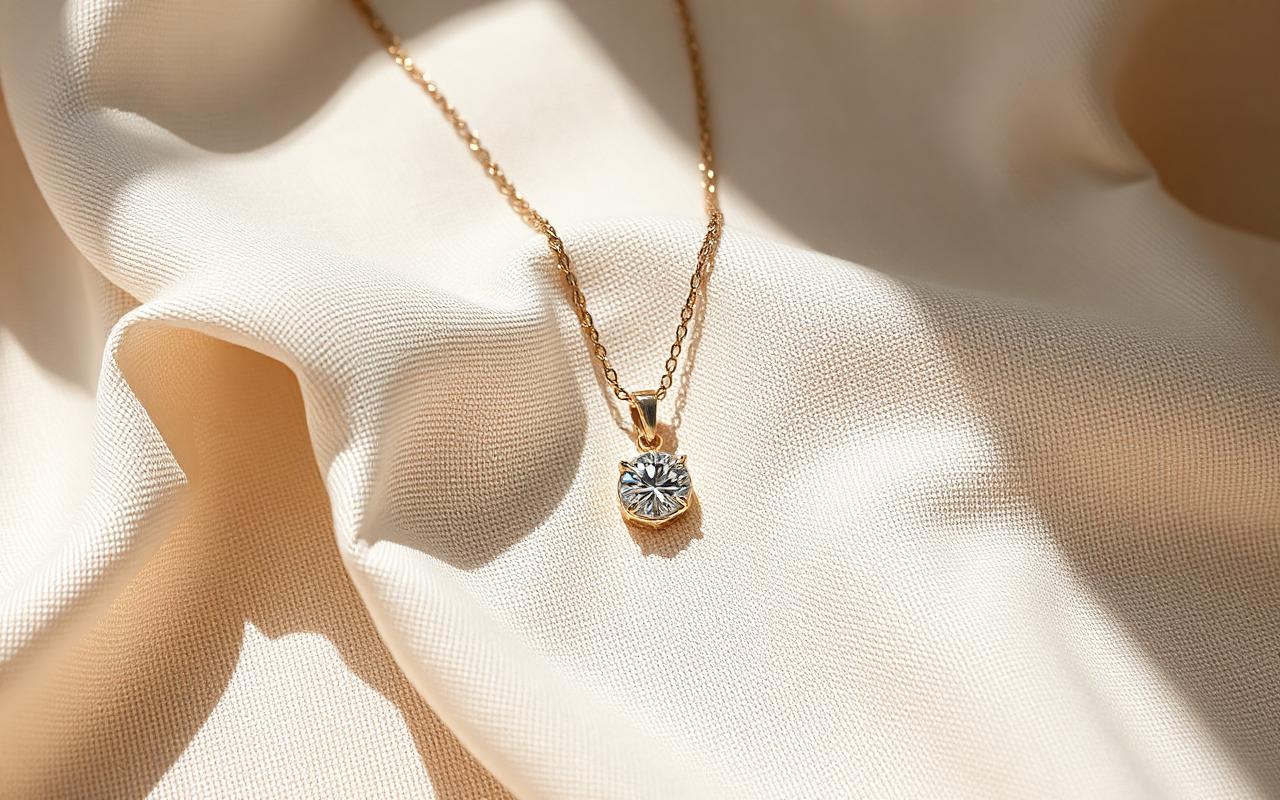
- Setting: You can receive the diamond loose, or have it set into a ring, pendant, earrings, or bracelet — either from the provider's collection or via a bespoke design.
Pros and Cons of Memorial Diamonds
Pros
- Permanent and wearable — you can carry your loved one with you every day without it being obvious to others.
- Unique — no two memorial diamonds are identical; the natural trace elements in ashes affect the final colour and character.
- Durable — diamonds are the hardest natural material; this memorial will outlast any headstone.
- Flexible — can be kept private or shared; does not require visiting a specific location.
- Works for pets — most providers accept animal ashes and fur.
Cons
- Cost — this is a premium memorial, typically starting at £800–£1,200 and rising well above £2,000 for larger stones.
- Time — you should expect to wait between 3 and 12 months from sending the ashes to receiving the diamond.
- Controversy — some industry critics have questioned whether ash-specific carbon is truly incorporated into each diamond, or whether generic lab carbon is used instead. Reputable providers address this directly with certification and documentation; it is worth asking any company for transparency on this point before ordering.
- Irreversibility — once ashes are used in the process, they cannot be returned in the same form; families with only a small amount of ash should consider this carefully.
How Much Does a Memorial Diamond Cost in the UK?
Prices vary considerably depending on size, colour, and provider. As a general guide:
- Entry-level (0.25–0.30 carat): approximately £800–£1,300
- Mid-range (0.50 carat): approximately £1,500–£2,500
- Premium (1.0 carat+): £3,000 and above
Colourless and blue diamonds tend to be the most expensive, as they require the highest purity of carbon and the most demanding growing conditions. Some providers also charge separately for cutting, certification, and jewellery settings.
Several UK companies offer payment plans, including interest-free monthly instalments — worth asking about if cost is a concern.
UK Providers Worth Knowing
The following companies are active in the UK market as of 2025. This is an informational overview — we recommend researching each one and speaking to them directly before committing.
Saint Diamonds (saintdiamonds.co.uk) — A UK-based provider with a strong focus on transparency and customer support. Prices start at £1,200, with jewellery settings from £390. They offer lifetime carbon storage, interest-free payment plans, and accompany customers through each stage of the process. Pet diamonds are available.
Algordanza UK (algordanza.co.uk) — The UK arm of a Swiss company that has been making memorial diamonds since 2004. Algordanza is distinctive in that it uses only 100% of your loved one's ashes or hair — no generic carbon is added. All diamonds are naturally blue to colourless. Prices start at £2,040 for a rough 0.30 carat stone.
Heart In Diamond (heart-in-diamond.co.uk) — An established provider with over 500 jewellery settings to choose from. They accept both ashes and hair and cover a wide range of budgets.
EverDear (everdear.co.uk) — One of the more affordable entry points in the UK market, with diamonds starting at £800. EverDear uses improved HPHT technology that they claim grows diamonds up to 30% larger than comparable processes. IGI-certified.
EverAmour (everamour.co.uk) — A UK provider specialising in bespoke memorial jewellery, with a process that typically takes 2–3 months.
Global Providers Worth Noting
LONITÉ (lonite.co.uk) — Swiss-headquartered, with a UK-facing site. Offers a wide range of diamond colours and sizes; process takes approximately 12 months.
Eterneva (US-based, ships internationally) — Known for a grief-support approach that accompanies the creation process with monthly video updates and photography. Prices from around $2,900.
Things to Consider Before Choosing a Provider
Before sending ashes to any company, it is worth asking:
- Can you document that my loved one's ashes were used? Ask for specific chain-of-custody documentation throughout the process.
- Is the diamond independently certified? Look for GIA or IGI certification at minimum.
- How much ash will be returned? Most companies return remaining ashes after the process.
- What happens if the diamond is smaller or larger than requested? Reputable providers have clear policies.
- Do you offer payment plans? Several UK companies do.
- What is your complaints process? Given the emotional and financial stakes, knowing there is a clear resolution path matters.
One important note: a controversy has circulated in the industry regarding whether some memorial diamond companies use generic laboratory carbon rather than the customer's ashes. The best companies address this proactively, with documentation, certification, and independent verification. If a provider is evasive on this question, treat that as a warning sign.
FAQ
Is a memorial diamond a real diamond? Yes. Memorial diamonds are genuine diamonds — they have the same physical, chemical, and optical properties as mined diamonds. They score 10 on the Mohs hardness scale and are certified by independent gemological institutes.
How much ash do I need to make a diamond? Most providers require between 200g and 500g of cremated remains. Some can work with less, or with hair instead (typically 5–10g). Contact your chosen provider before assuming you have enough.
Can you make a diamond from pet ashes? Yes. Most UK providers offer this service. Pet ashes and fur (for some species) can be used in the same way as human remains.
How long does the process take? Timescales range from around 2–3 months (for smaller, simpler diamonds) to 12 months or more (for larger or rarer-coloured stones).
Will the diamond look different to a regular diamond? Not to the naked eye. Memorial diamonds can be identified as lab-grown by specialist equipment, but are visually identical to natural diamonds.
Can I have more than one diamond made? Yes, if enough ash is available. Some families divide ashes between several family members, each receiving their own stone.
Conclusion
A diamond made from ashes is not for everyone — and it does not need to be. But for those who want a permanent, wearable, and deeply personal memorial, it is one of the most extraordinary options available today. The technology is real, the results are genuinely beautiful, and the industry — at its best — handles this process with the care and dignity it deserves.
Take your time. Ask questions. And if this feels right, know that it is one memorial that will truly last a lifetime.