Living Memorials
Memorial Reefs: Ashes Cast into the Seabed
A memorial reef sets the ashes into a concrete structure that is lowered onto the seabed, where it becomes habitat. Britain has one site, off the Dorset coast; the larger operators are American. Here is what each involves and costs.
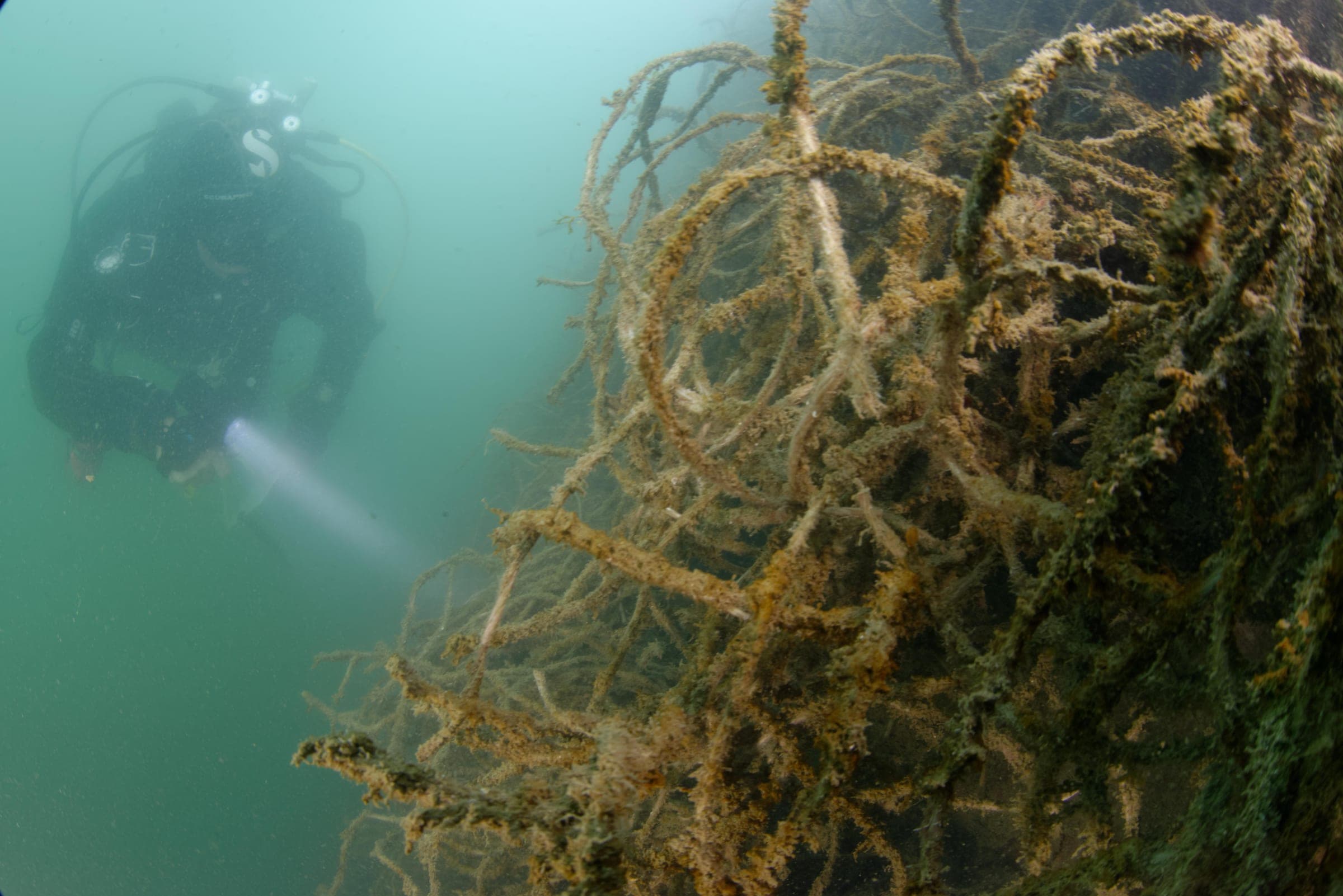
Scattering ashes at sea takes a few minutes and leaves nothing to return to. A memorial reef is the opposite: the ashes are mixed into a concrete structure that is lowered onto the seabed at a recorded position, where it becomes a surface for marine life to colonise. There is somewhere to go back to, and a set of coordinates to go back to it by.
It suits people whose lives were spent on or near the water, and families who want the memorial to do something rather than sit somewhere.
How it is made
The remains are combined with a marine-grade concrete mix and cast into a shape designed to be colonised — usually a dome perforated with holes, which shelters fish and gives algae, corals and invertebrates somewhere to attach. The finished unit is heavy, deliberately: it has to stay where it is put.
Placement is done by boat, at a site chosen for the purpose. Families are often invited aboard, and providers typically supply a certificate and the coordinates afterwards.
The UK option
Britain's only memorial seabed reef sits off the Jurassic Coast near Weymouth, in Dorset. The ashes are set into what the operator calls a Solace Stone, which is then placed on the seabed as part of the reef.
The price was £3,500, correct as of December 2024 according to the listing we checked — worth confirming, as it is the oldest figure on this page. It included:
- manufacture of the Solace Stone
- a biodegradable ashes carrier
- an engraved granite plaque
- transport for the stone and up to twelve family members to the site
- a Certificate of Placement
How much of the ashes the stone takes is not stated. Ask before booking, and decide what else is planned for the remains.
The American operators
Eternal Reefs is the best-known, and the model most copied. It casts cremated remains into "reef balls" and places them at permitted sites, with the Florida Keys, Miami and Fort Lauderdale among the locations shown on its site. What is unusual is how much the family can take part: pressing handprints and mementoes into the wet concrete at the casting, making a rubbing of the bronze plaque, and travelling out by boat to watch the reef being lowered. Prices are not published on the page we read; third-party sources report a starting figure of around $2,995, which we have not been able to verify — treat it as an indication and ask.
Resting Reef, a newer operator, builds memorial reefs from oyster shell at sites in Bali, positioning them as restoration in areas damaged by destructive fishing. Details vary by site and we have not verified its current pricing.
For a British family, the practical difference is travel. The Dorset reef is a day out; an American or Balinese reef means shipping the ashes abroad and flying out for the placement, or accepting that you will not be there.
The rules at sea
Two things are often confused:
- Scattering ashes at sea needs no licence in the UK. You can do it yourself, with the sensible guidance about tides, wind and staying clear of marinas and bathing water.
- Placing an object on the seabed is not scattering. Depositing structures in the marine area is licensable, and it is the reef operator who must hold the authorisation — not you. Ask which permission covers the site, and expect a clear answer; a legitimate operator will have one.
Full-body burial at sea is a different matter again, requiring a licence from the Marine Management Organisation, with only a few designated sites around the English coast.
What to ask before committing
- How much of the ashes does the unit take? Then decide what remains for anything else.
- What authorisation covers the placement, and who holds it?
- Will we get coordinates, and can we visit? Diving, snorkelling or a boat trip over the site — ask what is realistic at that depth.
- What happens if weather cancels the placement day? Rescheduling at whose cost.
- What is the plaque made of, and how long will it last underwater?
How it compares
A reef is at the expensive end, in the same range as a memorial diamond or a stratospheric flight, and like a memorial tree it makes something that goes on living. Unlike a tree, you cannot tend it, and unlike a remembrance stone you cannot hold it. Many families place a reef and keep a small keepsake too — the two answer different needs.
Common questions
Does the concrete harm the sea?
Purpose-made reef structures use marine-grade mixes designed to be pH-neutral and stable in seawater, and artificial reefs are widely used in conservation. Ask the operator what their units are made of and whether the design is one used in restoration work.
Will a reef really grow on it?
Colonisation depends on location, depth, current and water temperature. Ask what has grown on units already placed at that site, and how long it took.
Can we visit it?
Sometimes. Ask about depth, visibility and whether the operator runs memorial trips before you assume you will be able to dive it.
Can pets be included?
Ask the operator directly. Practice differs, and some sites do not permit it.
Is there a UK alternative if £3,500 is too much?
Scattering at sea costs nothing beyond a boat, and a biodegradable urn designed for water starts at about £35. Neither leaves a structure behind, which for some families is the point of a reef.
Sources
- Ashes interred as part of the UK's only memorial seabed reef — Scattering Ashes; Dorset location, Solace Stone, £3,500 as of December 2024, what is included (checked 23 September 2026)
- Eternal Reefs — reef balls, family participation, placement locations; prices not published (checked 23 September 2026)
- How to get a burial at sea licence in the UK — Funeral Guide; MMO licensing for full-body burial, and that scattering ashes needs no licence (checked 23 September 2026)
Continue reading
Turning Ashes into a Living Tree: The Complete UK Guide to Memorial Tree Burials (2025)
A living, growing memorial — biodegradable urns and memorial trees offer one of the most poetic and eco-friendly tributes. A complete UK guide for 2025.
Sending Ashes into Space: The UK Guide
Two very different things are sold as "ashes in space" — a balloon flight to the edge of the atmosphere, and a rocket launch into orbit or beyond. They cost different amounts, do different things, and only one of them is arranged from Britain.
What to Do With All the Ashes: Best Options for a Complete Memorial (2025 UK Guide)
If using every last bit of your loved one's ashes feels important, this guide covers the best 2025 UK options — from Remembrance Stones to biodegradable tree urns — for a complete and meaningful memorial.