Diamonds from Ashes: The Complete UK Guide (2025)
How memorial diamonds are made from ashes, what they cost in the UK, the providers worth knowing and the honest pros and cons before you decide.
Memorial options
Real diamonds grown from the carbon in cremated remains — how they are made, what they cost in the UK, and how long you will wait.
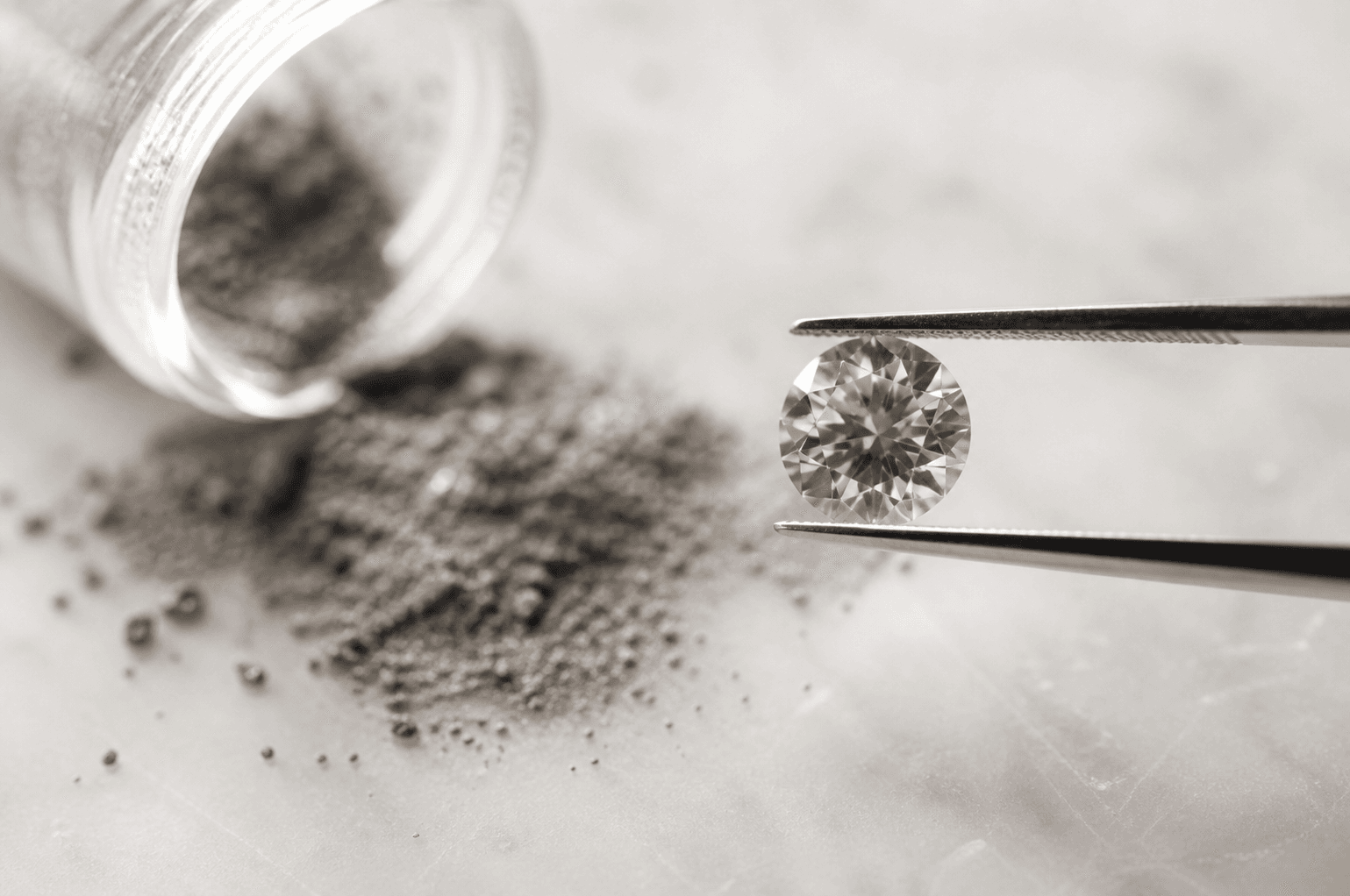
A memorial diamond is a real diamond, grown in a laboratory from carbon extracted from cremated remains or hair. Chemically and physically it is the same material as a mined diamond. It is also the most expensive way to turn ashes into something lasting, and the one with the longest wait — so it is worth understanding exactly what you are paying for before you send anything.
Cremated remains are mostly calcium phosphate. Only a small share is carbon — typically around 1–4%. The maker heats the ashes in an oxygen-free environment to drive off everything else, purifies what is left into graphite, and places it in a press with a tiny diamond "seed". The press recreates the heat and pressure found deep underground, and the diamond grows. It is then cut, polished and, if you choose, set into jewellery.
Some providers can also grow a diamond from a lock of hair instead of, or as well as, ashes.
More than most keepsakes. Providers usually ask for a measured portion of the remains rather than a pinch, and the amount rises with the size of the stone you order. Unused ashes should be returned to you — confirm that in writing before sending.
Price is driven mostly by carat weight, then by colour and cut. As a rough guide from our research:
| Size | Approximate price |
|---|---|
| 0.25–0.30 carat | £800–£1,300 |
| 0.50 carat | £1,500–£2,500 |
| 1.0 carat and above | £3,000 and more |
Settings such as rings and pendants are extra. Our full guide breaks down named UK providers and their starting prices.
Expect somewhere between two and twelve months from sending the ashes to receiving the stone. Smaller, colourless diamonds are quickest; larger or rare-coloured stones take longest. If a provider promises something much faster, ask why.
A diamond suits someone who wants to wear the memorial every day and is comfortable with the cost and the wait. It suits people less well if the priority is keeping all of the remains together — a diamond uses only a portion, and you will still need a home for the rest. For that, see urns or memorial stones.
Yes. A laboratory-grown diamond has the same crystal structure and hardness as a mined one. What makes it a memorial is where the carbon came from, which is why it matters that a provider can document the process.
You largely have to trust the provider's chain of custody. Look for one that explains how ashes are tracked through each stage, provides a certificate, and returns unused remains. Some offer photo or video updates during the process.
Yes. The process is the same for pets as for people. For a very small animal, ask whether there is enough ash for the size of stone you want.
No. Providers use a portion and return the rest, which many families then scatter, keep in an urn or divide between relatives.
In-depth guides
Tell us what you are weighing up and we will come back with options that fit — what they cost and how long they take. There is no deadline on this decision.